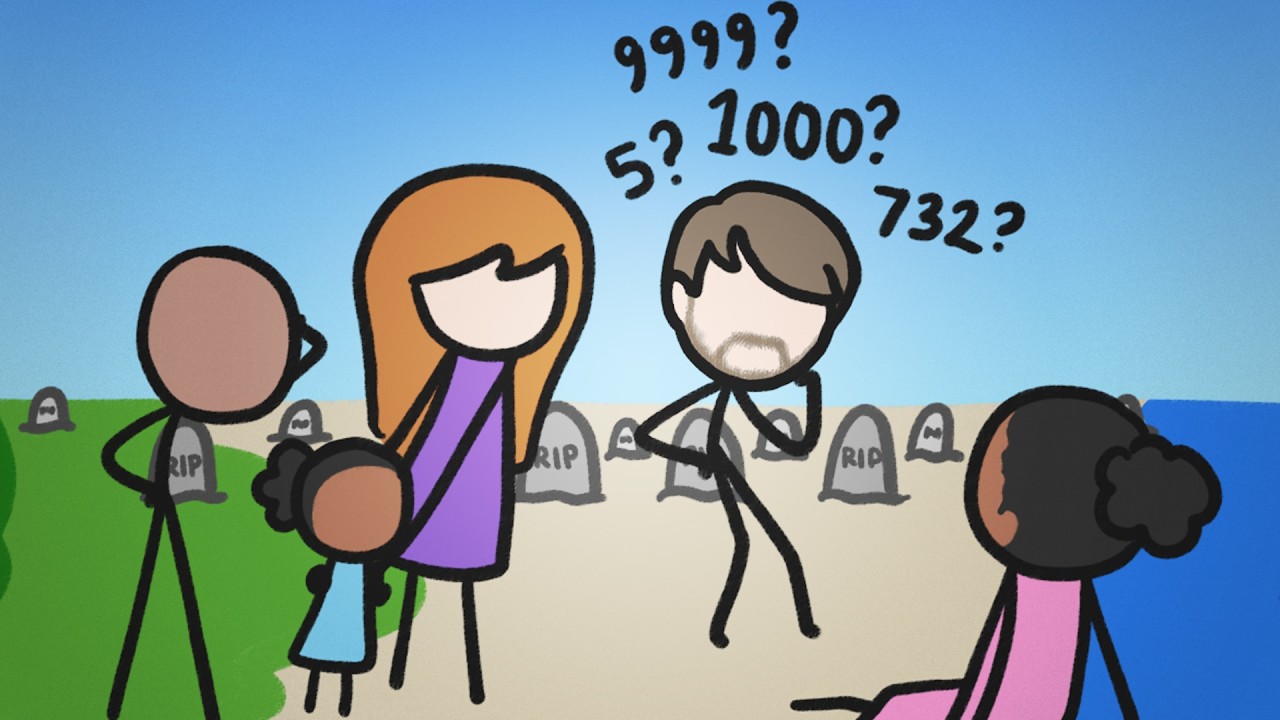
How Many People Do We Need to Survive an Apocalypse?
If nuclear blasts, asteroids, or alien lasers killed off almost all humans on Earth, how many people would be needed to rebuild a genetically sustainable human population?
LEARN MORE
**************
To learn more about this topic, start your googling with these keywords:
- Gene Pool: The total collection of different genes within a population. A larger gene pool means more genetic diversity.
- Genetic Diversity: Having a wide variety of different genes within a population.
- Inbreeding Depression: The reduced biological fitness caused by loss of genetic diversity as a result of inbreeding, or mating between closely related individuals within a species.
- Recessive Genes: Genes that only cause a trait or disease when two copies are present (one from each parent).
SUPPORT MINUTEEARTH
**************************
If you like what we do, you can help us!:
- Become our patron: https://patreon.com/MinuteEarth
- Our merch: store.dftba.com/me
- Our book: https://minuteearth.com/books
- Sign up to our newsletter: http://news.minuteearth.com
- Share this video with your friends and family
- Leave us a comment (we read them!)
CREDITS
*********
Cameron Duke | Script Writer, Narrator and Director
Arcadi Garcia i Rius | Storyboard Artist
Sarah Berman | Illustration, Video Editing and Animation
Nathaniel Schroeder | Music
MinuteEarth is produced by Neptune Studios LLC
https://neptunestudios.info
OUR STAFF
************
Lizah van der Aart • Sarah Berman • Cameron Duke
Arcadi Garcia i Rius • David Goldenberg • Melissa Hayes
Henry Reich • Ever Salazar • Leonardo Souza • Kate Yoshida
OUR LINKS
************
Youtube | https://youtube.com/MinuteEarth
TikTok | https://tiktok.com/@minuteearth
Twitter | https://twitter.com/MinuteEarth
Instagram | https://instagram.com/minute_earth
Facebook | https://facebook.com/Minuteearth
Website | https://minuteearth.com
Apple Podcasts| https://podcasts.apple.com/us/podcast/minuteearth/id649211176
REFERENCES
**************
Chaudhary, V., & Oli, M. K. (2020). A critical appraisal of population viability analysis. Conservation Biology, 34(1), 26–40. https://doi.org/10.1111/cobi.13414
Gutiérrez, D. (2002). The importance of unprotected habitats for the persistence of a metapopulation of the dingy skipper butterfly (Erynnis tages) in a fragmented landscape. Conservation Biology, 16(3). https://doi.org/10.1046/j.1523-1739.2002.00553.x
Hu, W., Hao, Z., Du, P., Di Vincenzo, F., Manzi, G., Cui, J., Fu, Y.-X., Pan, Y.-H., & Li, H. (2023). Genomic inference of a severe human bottleneck during the Early to Middle Pleistocene transition. Science, 381(6661), 979–984. https://doi.org/10.1126/science.abq7487
Marin, F., & Beluffi, C. (2018). Computing the minimal crew for a multi-generational space journey towards Proxima Centauri b. Journal of the British Interplanetary Society, 71(2), 430–437.
Mills, L. S. (2013). Conservation of wildlife populations: Demography, genetics, and management (2nd ed.). Wiley-Blackwell.
Rai, U. K. (2003). Minimum sizes for viable population and conservation biology. Our Nature, 1(1), 3–9. https://doi.org/10.3126/on.v1i1.297
Reed, D. H., O'Grady, J. J., Brook, B. W., Ballou, J. D., & Frankham, R. (2003). Estimates of minimum viable population sizes for vertebrates and factors influencing those estimates. Biological Conservation, 113(1), 23–34. https://doi.org/10.1016/S0006-3207(02)00346-4
Sano, S. (2022). Cultural evolution and minimal crew size to maintain culture level during interstellar travel. Journal of the British Interplanetary Society, 75(4), 118–126.
Sano, S. (2023). Minimal crew size and sensitive reproductive parameters on multigenerational interstellar travel. Journal of the British Interplanetary Society, 76(8), 288–296. https://doi.org/10.59332/jbis-076-08-0288
Schiffels, S., & Durbin, R. (2014). Inferring human population size and separation history from multiple genome sequences. Nature Genetics, 46(8), 919–925. https://doi.org/10.1038/ng.3015
Smith, C. M. (2014). Estimation of a genetically viable population for multigenerational interstellar voyaging: Review and data for project Hyperion. Acta Astronautica, 97, 16–29. https://doi.org/10.1016/j.actaastro.2013.12.013
Traill, L. W., Brook, B. W., Frankham, R. R., & Bradshaw, C. J. A. (2010). Pragmatic population viability targets in a rapidly changing world. Biological Conservation, 143(1), 28–34. https://doi.org/10.1016/j.biocon.2009.09.001
Waples, R. S. (2025). The idiot's guide to effective population size. Molecular Ecology. https://doi.org/10.1111/mec.17670
Yampolskiy, R. V. (2018). Minimum viable human population with intelligent interventions [Unpublished manuscript]. University of Louisville.
LEARN MORE
**************
To learn more about this topic, start your googling with these keywords:
- Gene Pool: The total collection of different genes within a population. A larger gene pool means more genetic diversity.
- Genetic Diversity: Having a wide variety of different genes within a population.
- Inbreeding Depression: The reduced biological fitness caused by loss of genetic diversity as a result of inbreeding, or mating between closely related individuals within a species.
- Recessive Genes: Genes that only cause a trait or disease when two copies are present (one from each parent).
SUPPORT MINUTEEARTH
**************************
If you like what we do, you can help us!:
- Become our patron: https://patreon.com/MinuteEarth
- Our merch: store.dftba.com/me
- Our book: https://minuteearth.com/books
- Sign up to our newsletter: http://news.minuteearth.com
- Share this video with your friends and family
- Leave us a comment (we read them!)
CREDITS
*********
Cameron Duke | Script Writer, Narrator and Director
Arcadi Garcia i Rius | Storyboard Artist
Sarah Berman | Illustration, Video Editing and Animation
Nathaniel Schroeder | Music
MinuteEarth is produced by Neptune Studios LLC
https://neptunestudios.info
OUR STAFF
************
Lizah van der Aart • Sarah Berman • Cameron Duke
Arcadi Garcia i Rius • David Goldenberg • Melissa Hayes
Henry Reich • Ever Salazar • Leonardo Souza • Kate Yoshida
OUR LINKS
************
Youtube | https://youtube.com/MinuteEarth
TikTok | https://tiktok.com/@minuteearth
Twitter | https://twitter.com/MinuteEarth
Instagram | https://instagram.com/minute_earth
Facebook | https://facebook.com/Minuteearth
Website | https://minuteearth.com
Apple Podcasts| https://podcasts.apple.com/us/podcast/minuteearth/id649211176
REFERENCES
**************
Chaudhary, V., & Oli, M. K. (2020). A critical appraisal of population viability analysis. Conservation Biology, 34(1), 26–40. https://doi.org/10.1111/cobi.13414
Gutiérrez, D. (2002). The importance of unprotected habitats for the persistence of a metapopulation of the dingy skipper butterfly (Erynnis tages) in a fragmented landscape. Conservation Biology, 16(3). https://doi.org/10.1046/j.1523-1739.2002.00553.x
Hu, W., Hao, Z., Du, P., Di Vincenzo, F., Manzi, G., Cui, J., Fu, Y.-X., Pan, Y.-H., & Li, H. (2023). Genomic inference of a severe human bottleneck during the Early to Middle Pleistocene transition. Science, 381(6661), 979–984. https://doi.org/10.1126/science.abq7487
Marin, F., & Beluffi, C. (2018). Computing the minimal crew for a multi-generational space journey towards Proxima Centauri b. Journal of the British Interplanetary Society, 71(2), 430–437.
Mills, L. S. (2013). Conservation of wildlife populations: Demography, genetics, and management (2nd ed.). Wiley-Blackwell.
Rai, U. K. (2003). Minimum sizes for viable population and conservation biology. Our Nature, 1(1), 3–9. https://doi.org/10.3126/on.v1i1.297
Reed, D. H., O'Grady, J. J., Brook, B. W., Ballou, J. D., & Frankham, R. (2003). Estimates of minimum viable population sizes for vertebrates and factors influencing those estimates. Biological Conservation, 113(1), 23–34. https://doi.org/10.1016/S0006-3207(02)00346-4
Sano, S. (2022). Cultural evolution and minimal crew size to maintain culture level during interstellar travel. Journal of the British Interplanetary Society, 75(4), 118–126.
Sano, S. (2023). Minimal crew size and sensitive reproductive parameters on multigenerational interstellar travel. Journal of the British Interplanetary Society, 76(8), 288–296. https://doi.org/10.59332/jbis-076-08-0288
Schiffels, S., & Durbin, R. (2014). Inferring human population size and separation history from multiple genome sequences. Nature Genetics, 46(8), 919–925. https://doi.org/10.1038/ng.3015
Smith, C. M. (2014). Estimation of a genetically viable population for multigenerational interstellar voyaging: Review and data for project Hyperion. Acta Astronautica, 97, 16–29. https://doi.org/10.1016/j.actaastro.2013.12.013
Traill, L. W., Brook, B. W., Frankham, R. R., & Bradshaw, C. J. A. (2010). Pragmatic population viability targets in a rapidly changing world. Biological Conservation, 143(1), 28–34. https://doi.org/10.1016/j.biocon.2009.09.001
Waples, R. S. (2025). The idiot's guide to effective population size. Molecular Ecology. https://doi.org/10.1111/mec.17670
Yampolskiy, R. V. (2018). Minimum viable human population with intelligent interventions [Unpublished manuscript]. University of Louisville.

MinuteEarth
Science and stories about our awesome planet!
Our staff: Lizah van der Aart, Sarah Berman, Cameron Duke, Arcadi Garcia, David Goldenberg, Melissa Hayes, Alex Reich, Henry Reich, Peter Reich, Ever Salazar, Leonardo Souza, Kate Yoshida and Jasper Palfree.
...