how to draw mitochondria #cellbiology
Here's how to draw a cross section of mitochondria.
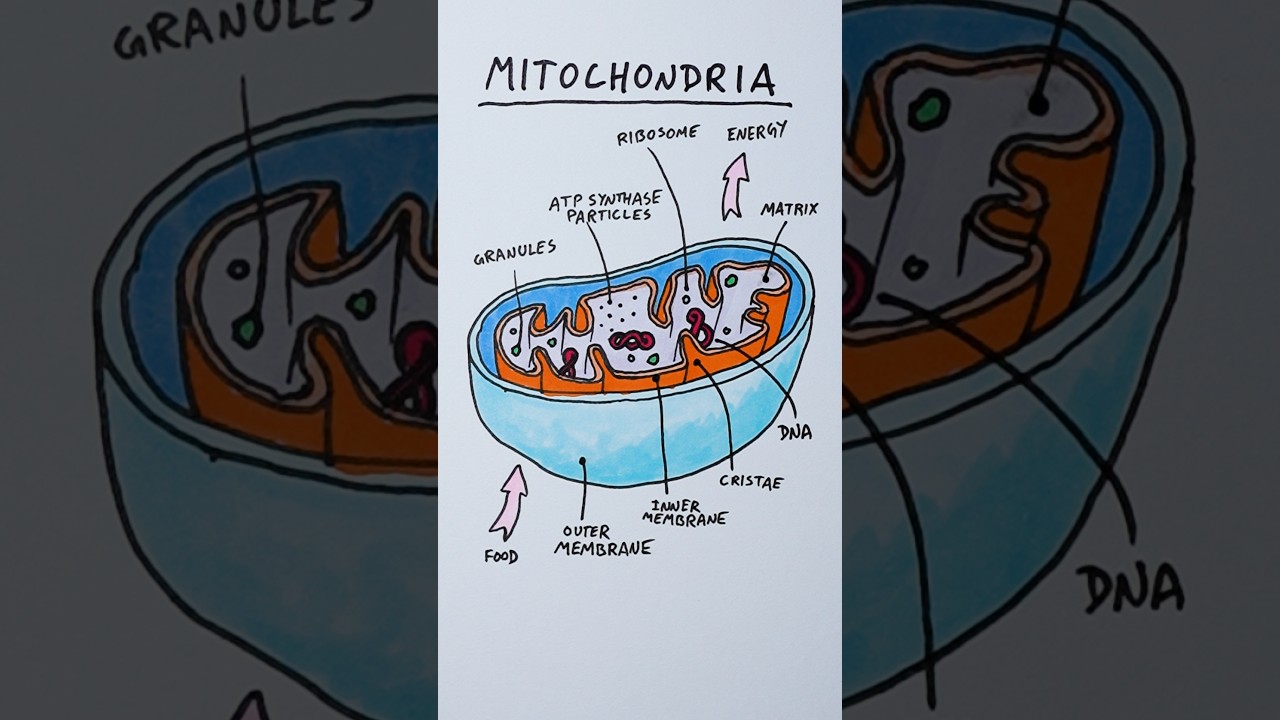
This is how to draw a cross-section of a mitochondria. The first thing you need to know is mitochondria live inside other cells.
They're are kind of like cell within a cell because very early on in the evolution of life an ancestor cell to the mitochondrion got eaten by another cell, but then didn't get digested. Instead the cells started working together, I give you food, you give me energy. That's why people call them the powerhouse of the cell. And it was very successful as pretty much every cell in plants, animals and fungi have mitochondria in them.
They have a smooth outer membrane and wiggly inner membrane, the folds are called cristae, and they help the inner membrane have a large surface area because this is where all the energy generation happens.
The inner membrane is studded with these things called ATP synthase particles which a key part of the energy creation, driving the creation of ATP the main energy carrying molecule in cells.
Inside the inner membrane is. a gel-like fluid called the matrix, which contains hundreds of enzymes which break down the nutrients that come in. These metabolic processes also use oxygen which is why red blood cells don't have mitochondria in them, as they would suck up all the oxygen the red blood cells are trying to transport around the body.
We also have ribosomes the protein builders in the cell, and granules who regulate the speed of metabolism in the mitochondria.
And finally mitochondrial DNA which is completely different to the DNA of the host cell, interestingly we inherit our mitochondrial DNA only from our mothers. And this DNA allows mitochondria to f self-replicate within cells, similar to how bacteria reproduce.
So that's mitochondria, how cute are they!
This is how to draw a cross-section of a mitochondria. The first thing you need to know is mitochondria live inside other cells.
They're are kind of like cell within a cell because very early on in the evolution of life an ancestor cell to the mitochondrion got eaten by another cell, but then didn't get digested. Instead the cells started working together, I give you food, you give me energy. That's why people call them the powerhouse of the cell. And it was very successful as pretty much every cell in plants, animals and fungi have mitochondria in them.
They have a smooth outer membrane and wiggly inner membrane, the folds are called cristae, and they help the inner membrane have a large surface area because this is where all the energy generation happens.
The inner membrane is studded with these things called ATP synthase particles which a key part of the energy creation, driving the creation of ATP the main energy carrying molecule in cells.
Inside the inner membrane is. a gel-like fluid called the matrix, which contains hundreds of enzymes which break down the nutrients that come in. These metabolic processes also use oxygen which is why red blood cells don't have mitochondria in them, as they would suck up all the oxygen the red blood cells are trying to transport around the body.
We also have ribosomes the protein builders in the cell, and granules who regulate the speed of metabolism in the mitochondria.
And finally mitochondrial DNA which is completely different to the DNA of the host cell, interestingly we inherit our mitochondrial DNA only from our mothers. And this DNA allows mitochondria to f self-replicate within cells, similar to how bacteria reproduce.
So that's mitochondria, how cute are they!

Domain of Science
Welcome to the Domain of Science.
Made and hosted by Dominic Walliman PhD experimental quantum physicist and author.
F.A.Q: https://dominicwalliman.com/faq
Dr.Dom also writes books: https://profastrocat.com/
Makes posters: https://store.dftba.com/collect...