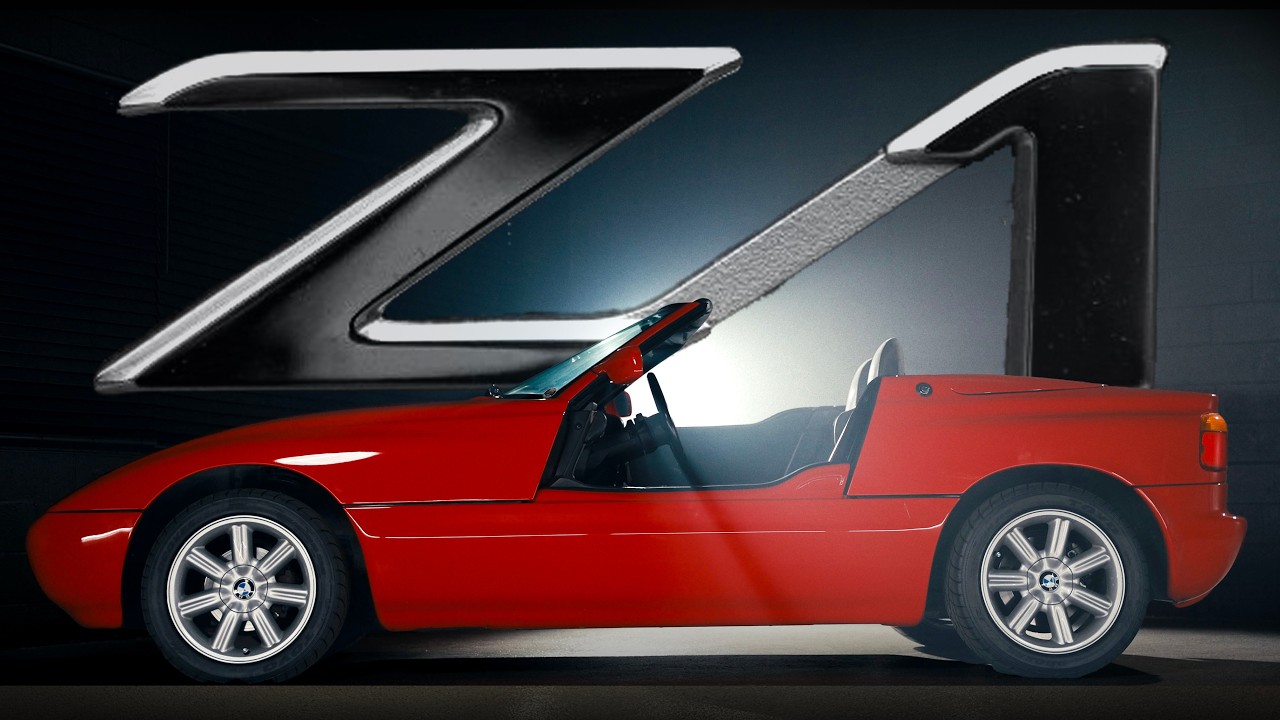
The BMW Z1 Proved A Startup Could Make BMW Cool Again — Revelations with Jason Cammisa
The BMW Z1 was a fascinating take on the Mazda Miata formula — before the Miata ever happened. With drop-down doors, a front-mid engine, plastic body, and a bespoke rear suspension, it was full of innovations — but its real purpose was to make BMW cool again. It worked.
===
Visit https://JasonSentMe.com for a quote on Hagerty's Guaranteed Value® Insurance!
===
The BMW Z1 was created by a startup owned by BMW called Technik GmbH. This group operated fully outside the normal BMW hierarchy, charged with finding future trends to help the brand better compete with Mercedes and to find younger buyers.
Technik GmbH was run by Dr. Ulrich Bez, whose storied career included two stints at Porsche (one where he was a loud voice against the 928's replacement of the 911) and his legendary resurrection of the Aston Martin brand with the VH-platform cars (Vantage, DB9, DBS, and Rapide, to name a few.)
The Z1 shared many components with (and indeed is considered a variation of) the E30 325i and 325iX, including its 2.5-liter M20 straight-6 and 5-speed manual transmission. However, its wheelbase was shortened significantly so that it would fit its occupants like a glove — and that necessitated a fully new rear suspension, which Technik developed itself before this "Z-Axle" design proliferated across the BMW range.
This video clears up some confusion about the Z1. Firstly, Z didn't stand for "Zukunft," the German word for "future." Secondly, the engine wasn't moved rearward by 12 inches relative to the E30: the suspension was moved forward. This placed the engine within the wheelbase (for better weight distribution) but allowed the use of both the E30's basic electrical architecture and front suspension almost completely unmodified. It also helped crash safety.
The Z1's doors are, of themselves, a fascinating story — and a necessity on a car that otherwise risked being received as "conventional." This two-seat roadster's mission was to make BMW cool again: in the mid-1980s, BMW had stagnated and offered little for enthusiasts.
It worked, changing the image of BMW around the globe, but especially in Germany. But the story of how it happened — and how *quickly* it all happened — is a fascinating look into the workings of car companies.
===
Contact us:
Suggestions and feedback - videoquestions@hagerty.com
Press inquiries - press@hagerty.com
Partnership requests - partnerships@hagerty.com
===
Visit https://JasonSentMe.com for a quote on Hagerty's Guaranteed Value® Insurance!
===
The BMW Z1 was created by a startup owned by BMW called Technik GmbH. This group operated fully outside the normal BMW hierarchy, charged with finding future trends to help the brand better compete with Mercedes and to find younger buyers.
Technik GmbH was run by Dr. Ulrich Bez, whose storied career included two stints at Porsche (one where he was a loud voice against the 928's replacement of the 911) and his legendary resurrection of the Aston Martin brand with the VH-platform cars (Vantage, DB9, DBS, and Rapide, to name a few.)
The Z1 shared many components with (and indeed is considered a variation of) the E30 325i and 325iX, including its 2.5-liter M20 straight-6 and 5-speed manual transmission. However, its wheelbase was shortened significantly so that it would fit its occupants like a glove — and that necessitated a fully new rear suspension, which Technik developed itself before this "Z-Axle" design proliferated across the BMW range.
This video clears up some confusion about the Z1. Firstly, Z didn't stand for "Zukunft," the German word for "future." Secondly, the engine wasn't moved rearward by 12 inches relative to the E30: the suspension was moved forward. This placed the engine within the wheelbase (for better weight distribution) but allowed the use of both the E30's basic electrical architecture and front suspension almost completely unmodified. It also helped crash safety.
The Z1's doors are, of themselves, a fascinating story — and a necessity on a car that otherwise risked being received as "conventional." This two-seat roadster's mission was to make BMW cool again: in the mid-1980s, BMW had stagnated and offered little for enthusiasts.
It worked, changing the image of BMW around the globe, but especially in Germany. But the story of how it happened — and how *quickly* it all happened — is a fascinating look into the workings of car companies.
===
Contact us:
Suggestions and feedback - videoquestions@hagerty.com
Press inquiries - press@hagerty.com
Partnership requests - partnerships@hagerty.com

Hagerty
At Hagerty Media, we illuminate the joy of driving, the wonder of mechanical components, and the bond drivers share with their machines.
Subscribe to our YouTube channel for new videos every day! http://bit.ly/HagertyYouTube
Contact us:
Suggestions an...
The Final Push: Who Is Actually Going to Make It to RADwood? | RADwood Build Challenge Ep. 5
Hagerty
The Austin Allegro that thinks it's an Integra Type R! | Henry Catchpole - The Driver's Seat
Hagerty
50 years of the Porsche 911 Turbo | w/ Jason Cammisa, Henry Catchpole, Jeff Zwart & Pat Long
Hagerty