System Design for Beginners (2026)
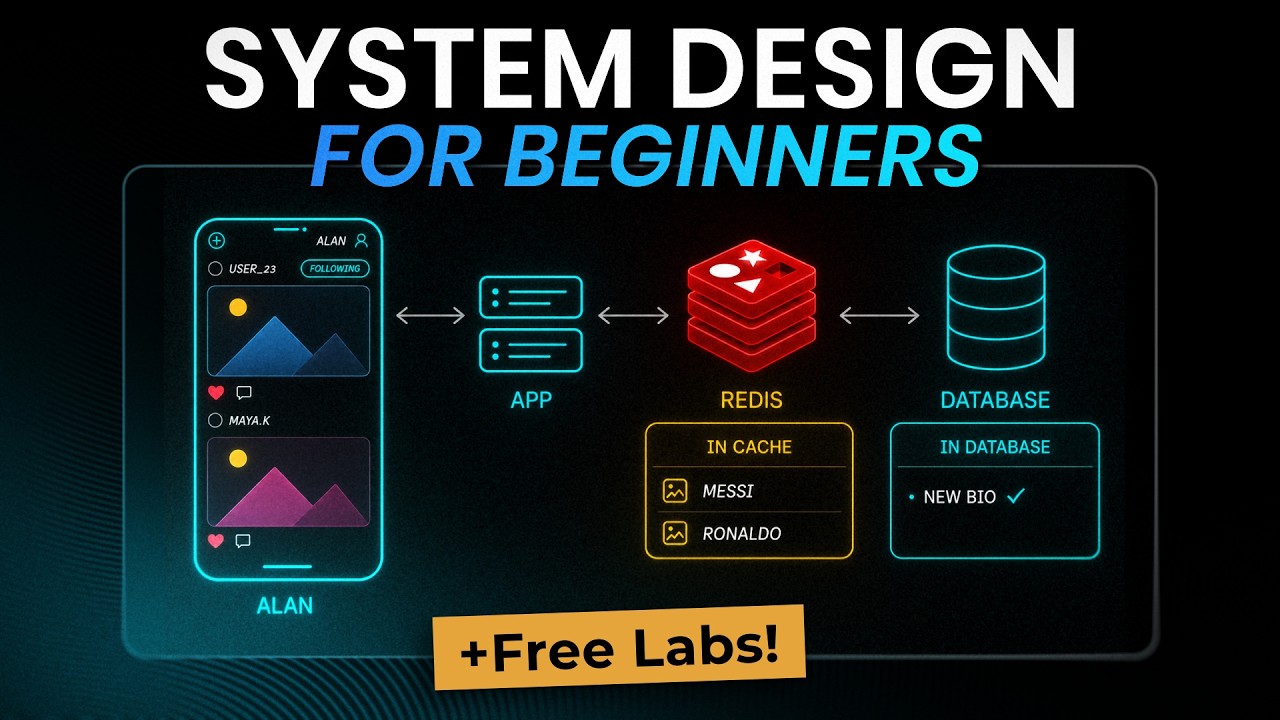
System design is how you choose the right components and put them in the right place to solve a software problem. In this video, we build a real photo-sharing app from scratch, starting with a single $10 server and watching it fail in exactly the ways yours will fail in production.
We don't lecture you on abstract concepts. Instead, we design one real application together and add components only when they become necessary. You'll see why a load balancer exists, when a cache actually helps, how replication saves your data, and what sharding is for. Every box has a reason.
The course comes with four free hands-on labs where you practice on real infrastructure. You'll set up load balancers and watch failover work, add a database index and see a 5-million-row query drop from seconds to milliseconds, use Redis caching to understand cache hits and stale reads, and run a Postgres replica that you'll promote when the primary dies.
? Free hands-on labs: https://kode.wiki/4fpJtkE
? What you'll learn:
1️⃣ The difference between functional and nonfunctional requirements (and why requirements come before design)
2️⃣ Vertical vs. horizontal scaling and when each one makes sense
3️⃣ How load balancers spread traffic and health checks keep servers alive
4️⃣ Why stateless servers matter and where to store login sessions
5️⃣ Indexing, caching, replication, and sharding with real failure examples
⏰ Timestamps:
00:00:00 - Introduction to System Design
00:01:56 - What Is a Server and Where Does Code Live
00:02:55 - Failure #1: CPU and RAM Run Out (Load Balancer)
00:03:37 - Failure #2: Database Overloaded (Caching)
00:04:06 - Failure #3:The Machine Dies (Replication and Backups)
00:05:37 - HLD vs. LLD
00:07:45 - Interview Byte 1
00:08:56 - Functional vs Non-Functional
00:12:20 - 5 Questions Before You Design Anything
00:16:22 - Interview Byte 2
00:17:30 - Monolith vs. Microservices (When to Split)
00:21:24 - Vertical vs. Horizontal Scaling
00:24:28 - Interview Byte 3
00:25:48 - How a request actually travels
00:29:44 - Load Balancer: Health Checks and Distribution
00:35:40 - Stateless vs. Stateful
00:41:58 - Interview Byte 4
00:43.04 - Free Lab 1 - Load balancer
00:43:49 - Data Modeling: Identifying Access Patterns
00:50:43 - SQL vs. NoSQL
00:56:02 - Interview Byte 5
00:57:15 - Database Indexes
01:01:06 - Free lab 2 - Database Indexes
01:02:22 - Caching
01:11:21 - Interview Byte 6
01:12:53 - Free Lab 3 - Caching with Redis
01:13:01 - Replication
01:19:34 - Sharding
01:24:03 - Free Lab 4 - Replication
01:24:27 - The Design We Made So Far
? Free hands-on labs: https://kode.wiki/4fpJtkE
? Subscribe for more system design, backend engineering, and real-world scaling patterns
#SystemDesign #BackendEngineering #KodeKloud #DatabaseDesign #Scaling #LoadBalancing #Caching #DatabaseReplication #DistributedSystems #Sharding #Microservices #TechInterviews #CloudArchitecture #SoftwareArchitecture #DataModeling
We don't lecture you on abstract concepts. Instead, we design one real application together and add components only when they become necessary. You'll see why a load balancer exists, when a cache actually helps, how replication saves your data, and what sharding is for. Every box has a reason.
The course comes with four free hands-on labs where you practice on real infrastructure. You'll set up load balancers and watch failover work, add a database index and see a 5-million-row query drop from seconds to milliseconds, use Redis caching to understand cache hits and stale reads, and run a Postgres replica that you'll promote when the primary dies.
? Free hands-on labs: https://kode.wiki/4fpJtkE
? What you'll learn:
1️⃣ The difference between functional and nonfunctional requirements (and why requirements come before design)
2️⃣ Vertical vs. horizontal scaling and when each one makes sense
3️⃣ How load balancers spread traffic and health checks keep servers alive
4️⃣ Why stateless servers matter and where to store login sessions
5️⃣ Indexing, caching, replication, and sharding with real failure examples
⏰ Timestamps:
00:00:00 - Introduction to System Design
00:01:56 - What Is a Server and Where Does Code Live
00:02:55 - Failure #1: CPU and RAM Run Out (Load Balancer)
00:03:37 - Failure #2: Database Overloaded (Caching)
00:04:06 - Failure #3:The Machine Dies (Replication and Backups)
00:05:37 - HLD vs. LLD
00:07:45 - Interview Byte 1
00:08:56 - Functional vs Non-Functional
00:12:20 - 5 Questions Before You Design Anything
00:16:22 - Interview Byte 2
00:17:30 - Monolith vs. Microservices (When to Split)
00:21:24 - Vertical vs. Horizontal Scaling
00:24:28 - Interview Byte 3
00:25:48 - How a request actually travels
00:29:44 - Load Balancer: Health Checks and Distribution
00:35:40 - Stateless vs. Stateful
00:41:58 - Interview Byte 4
00:43.04 - Free Lab 1 - Load balancer
00:43:49 - Data Modeling: Identifying Access Patterns
00:50:43 - SQL vs. NoSQL
00:56:02 - Interview Byte 5
00:57:15 - Database Indexes
01:01:06 - Free lab 2 - Database Indexes
01:02:22 - Caching
01:11:21 - Interview Byte 6
01:12:53 - Free Lab 3 - Caching with Redis
01:13:01 - Replication
01:19:34 - Sharding
01:24:03 - Free Lab 4 - Replication
01:24:27 - The Design We Made So Far
? Free hands-on labs: https://kode.wiki/4fpJtkE
? Subscribe for more system design, backend engineering, and real-world scaling patterns
#SystemDesign #BackendEngineering #KodeKloud #DatabaseDesign #Scaling #LoadBalancing #Caching #DatabaseReplication #DistributedSystems #Sharding #Microservices #TechInterviews #CloudArchitecture #SoftwareArchitecture #DataModeling

KodeKloud
...