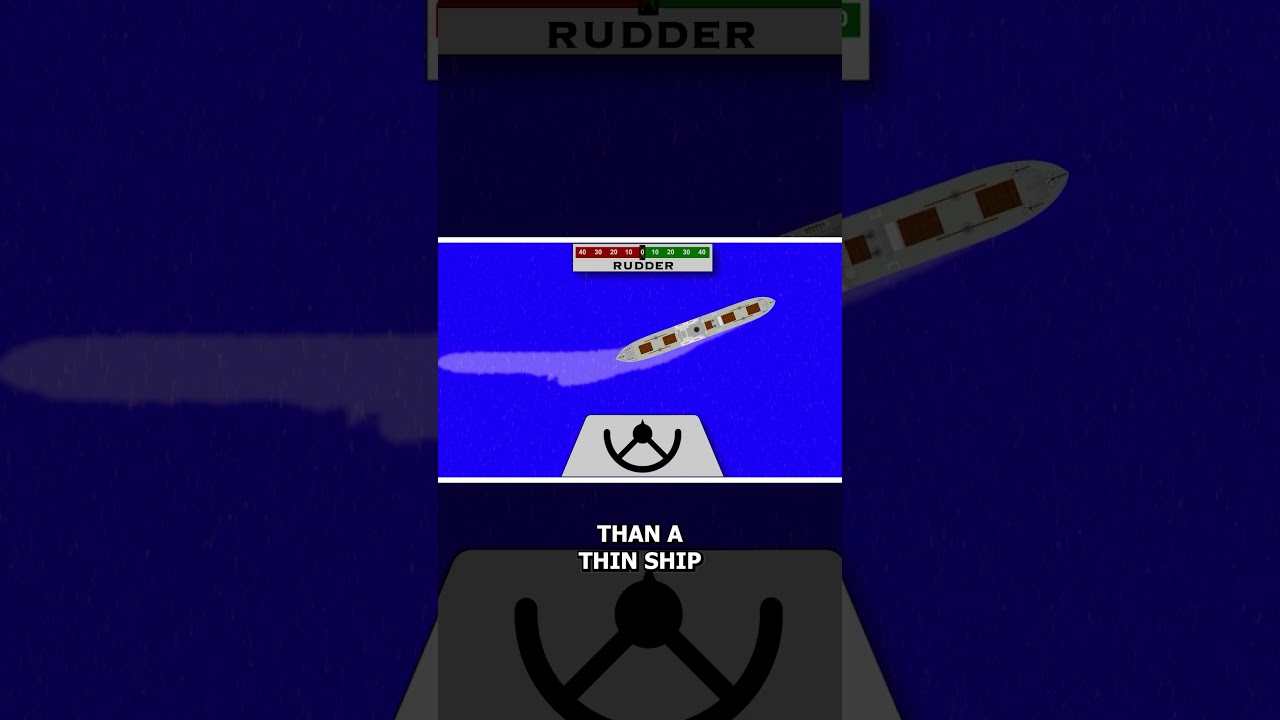
Why Fat Ships Wobble Across the Ocean
Wide-beam vessels experience reduced directional stability, causing a phenomenon where the hull continues to turn faster even after the rudder is returned to center. To keep a straight course, bridge crews must apply continuous counter-helm corrections, resulting in an S-shaped wobble trajectory across the water.
Naval architects categorize this dynamic using the length-to-beam ratio, where a standard vessel averages a value near seven. Specialized ships modify this proportion dramatically, with maneuverable harbor tugs dropping to low ratios while ocean liners increase hull length to maintain course stability across long transits.
#ShipEngineering #NavalArchitecture #MaritimeTechnology #HowShipsWork #CasualNavigation
Naval architects categorize this dynamic using the length-to-beam ratio, where a standard vessel averages a value near seven. Specialized ships modify this proportion dramatically, with maneuverable harbor tugs dropping to low ratios while ocean liners increase hull length to maintain course stability across long transits.
#ShipEngineering #NavalArchitecture #MaritimeTechnology #HowShipsWork #CasualNavigation

Casual Navigation
Your Window Into The Maritime World
Casual Navigation creates content that explores many different aspects of the maritime industry, with the aim of making it fun and interesting for anyone to enjoy.
We publish new videos on the Second and Last Friday o...